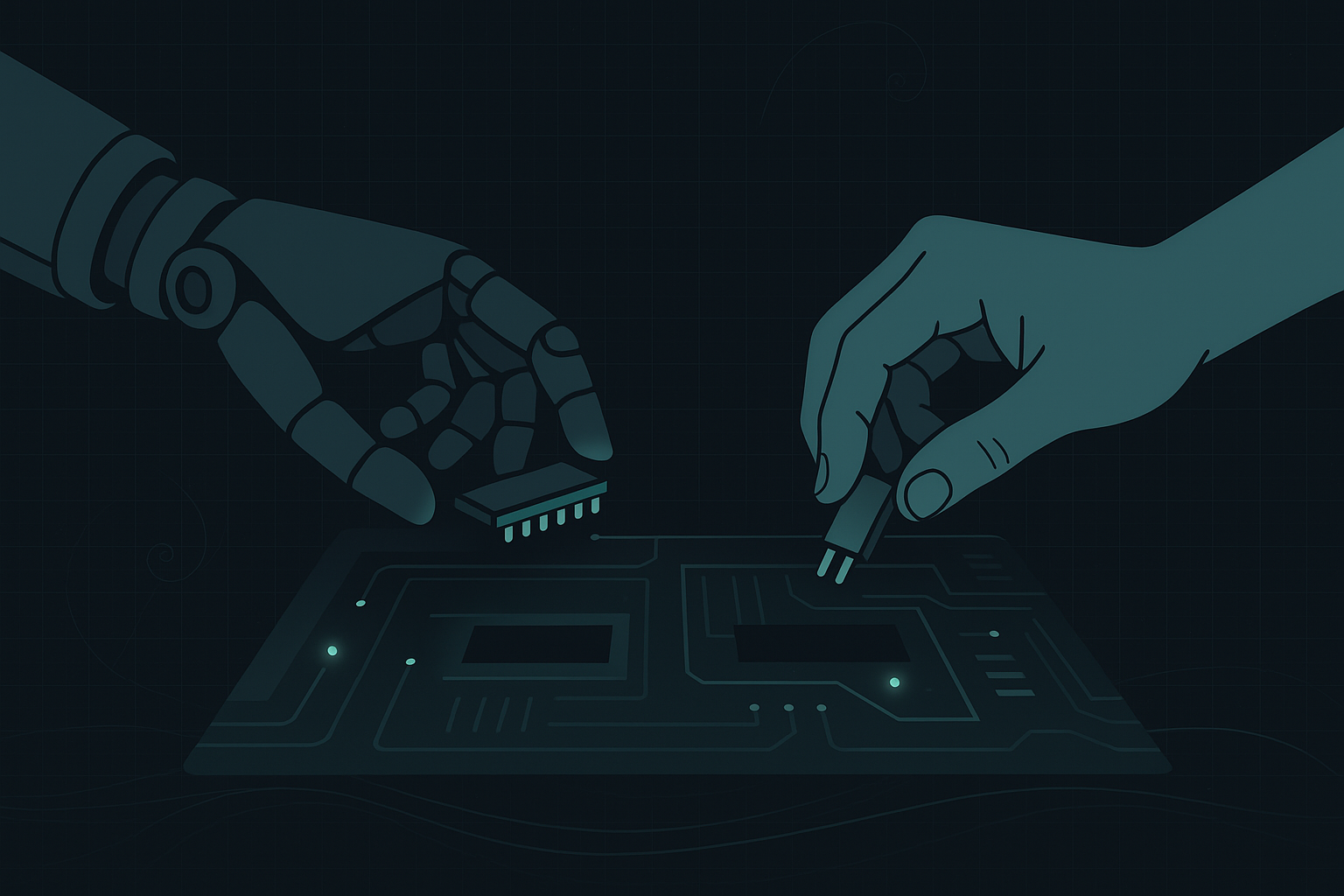
The headlines oscillate between "AI will eliminate programming jobs" and "AI is useless hype." Neither extreme is right. The reality is more nuanced and more interesting: AI is changing what software engineering looks like without eliminating the need for software engineers.
Understanding this shift matters for engineering leaders. Get it wrong and you either over-invest in AI that doesn't deliver or miss the actual transformation happening in your industry. Here's what I think is actually happening.
What AI Actually Automates
AI coding tools are genuinely good at certain categories of work:
Boilerplate code. Standard patterns, repetitive structures, code that looks like a lot of other code. API endpoints, test scaffolding, configuration files. AI handles these quickly because they're pattern-matching problems with lots of training examples.
Syntax and API details. Remembering the exact arguments to a function, the right import statement, the proper config format. AI has effectively memorized the documentation, making lookup faster.
Translation between representations. Converting requirements to code, code to tests, code to documentation. These are transformations AI can approximate even when it doesn't truly understand either side.
For tasks in these categories, AI provides real acceleration. Engineers who use these tools for appropriate tasks get more done. The boost is real.
What AI Doesn't Automate
But significant parts of software engineering remain beyond current AI capabilities:
Understanding the actual problem. AI can write code for what you ask. It can't figure out what you should ask. The work of understanding users, translating business needs into technical requirements, and deciding what to build remains human work.
Architecture and design. How systems should fit together, what tradeoffs to make, how to balance competing concerns. These require judgment that comes from experience and understanding of context AI doesn't have.
Debugging complex issues. When things go wrong in novel ways, when symptoms are far from causes, when the problem requires understanding system behavior AI was never trained on. AI can help narrow things down, but the hard debugging is still human work.
Code review and quality judgment. Evaluating whether code is good, not just whether it compiles. Does it handle edge cases? Is it maintainable? Does it match the team's patterns? These require understanding that extends beyond the code itself.
Working with people. Understanding what teammates mean when they're imprecise. Navigating organizational complexity. Knowing when to push back on requirements. The human coordination that makes teams function.
The Actual Impact
So what's the net effect? From what I've seen:
Individual productivity increases, modestly. Engineers with good AI tool usage are probably 10-30% more productive on code generation tasks, which are maybe 20-30% of their actual work. The net productivity gain is real but not transformative.
The nature of work shifts. Less time typing, more time reviewing AI output. Less time on boilerplate, more time on the parts AI can't help with. The job becomes more about judgment and less about mechanical code production.
Skill requirements change. Knowing obscure syntax matters less when AI can look it up. Understanding systems and making good decisions matters more when AI handles the mechanical parts. The valuable skills shift toward things AI can't do.
Junior roles get squeezed. The boilerplate work that junior engineers used to learn on is exactly what AI handles well. This creates real questions about how people develop engineering skills. But it doesn't eliminate the need for senior engineers; it might increase it.
What This Means for Engineering Leaders
If you're leading an engineering team, some implications:
Don't expect AI to reduce headcount. Companies hoping to do the same work with fewer engineers because of AI will mostly be disappointed. The productivity gains are too modest and too unevenly distributed to drive significant headcount reduction.
Do expect AI to change how work happens. Teams that adopt AI tools effectively will work differently. Ignoring these tools creates competitive disadvantage. But adoption requires investment in training, tooling, and workflow changes.
Hire for judgment over syntax knowledge. The skills that AI handles well are worth less. The skills that AI can't handle are worth more. Shift your hiring criteria accordingly. Systems thinking, problem decomposition, and communication matter more than ever.
Invest in learning paths for junior engineers. If AI handles the work that traditionally built junior skills, you need alternative approaches. Mentorship, structured learning, and deliberate practice become more important, not less.
Stay skeptical of vendor claims. Every AI tool promises transformative productivity gains. Most deliver modest improvements that require real effort to realize. Evaluate carefully and be willing to drop tools that don't pay off.
The Longer View
AI capabilities are improving. What's true today might not be true in five years. But the pattern of technology absorbing routine work while creating demand for higher-level skills is consistent across decades of software development. Compilers didn't eliminate programmers. High-level languages didn't eliminate programmers. Cloud platforms didn't eliminate programmers. AI probably won't either.
What happened each time was that the job shifted. The routine work got automated. The remaining work became more interesting and more valuable. Total employment in software development grew, not shrank, as each wave of automation made it possible to build things that weren't feasible before.
I expect AI to follow this pattern. It's making engineers more productive, which makes software development more valuable, which increases demand for engineering work. The engineers who thrive will be the ones who use AI effectively while developing the skills AI can't replicate.
AI won't replace your engineers. But engineers who learn to work with AI will outperform those who don't. That's the real transition to manage.
Frequently Asked Questions
Want help thinking through AI's impact on your engineering organization?
Let's Talk →