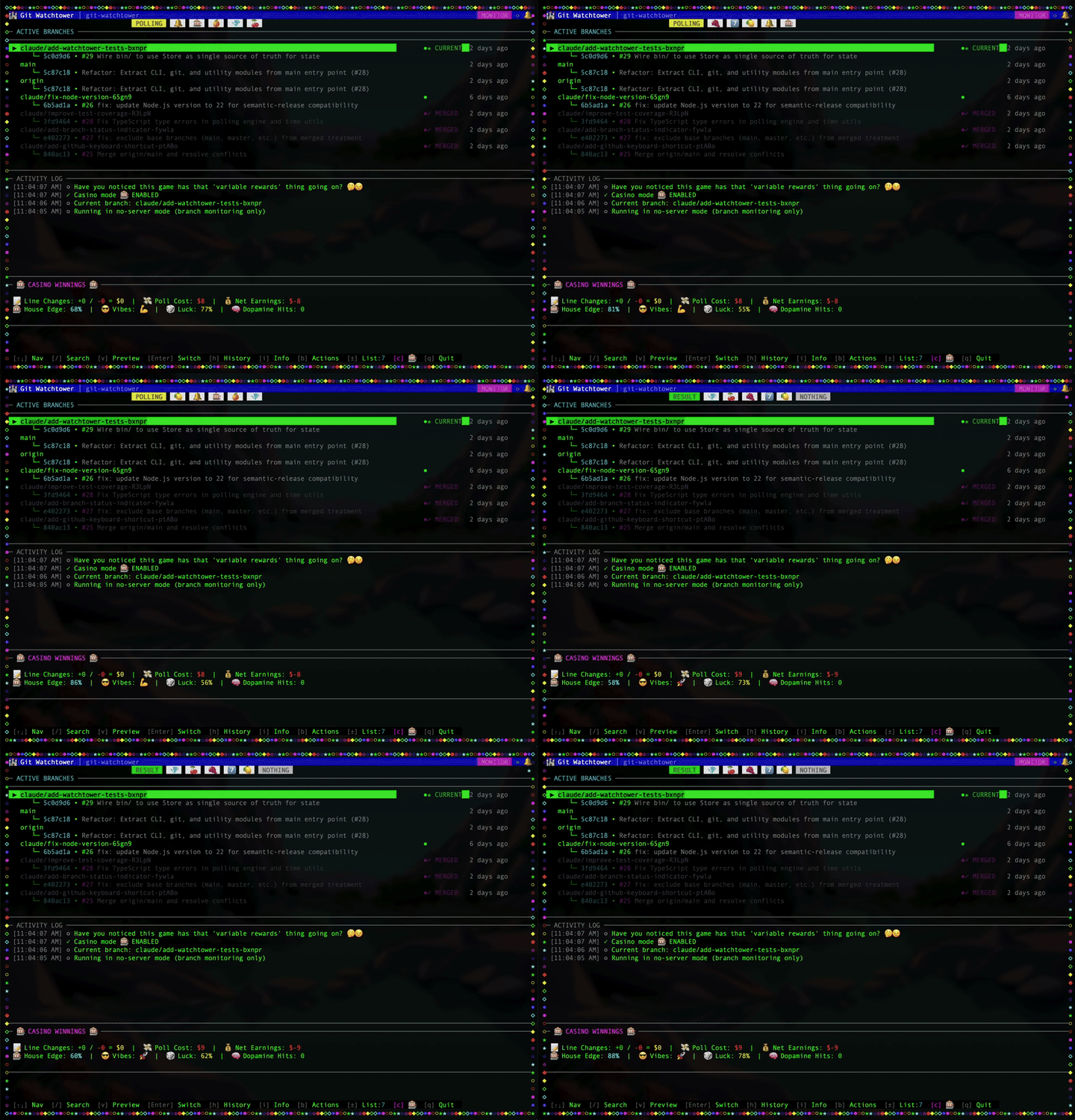
Here's the scene.
I have 5 coding agents running in the cloud on different branches. Terminal open. Git-watchtower polling every few seconds.
Nothing.
Nothing.
Nothing.
Then: branch claude/add-watchtower-tests-bxnpr updates. A rush. I pull it down, scan the diff. It's good. Back to waiting.
Nothing.
Nothing.
Then two branches update at once. The rush is bigger.
I've felt this before. I just couldn't place it at first.
Then it clicked. The anticipation between polls. Not knowing when the next hit would land. Not knowing whether it'd be clean or broken. The little jolt when something arrives. This is a slot machine. I'm sitting at a slot machine.
The Psychology Is Textbook
B.F. Skinner figured this out in the 1950s. Rats that received food pellets on unpredictable schedules pressed the lever more compulsively than rats that got rewarded every time. He called it variable ratio reinforcement. Casinos built a $100 billion industry on it.
Silicon Valley knows this too. It's why your phone buzzes at irregular intervals. It's why pull-to-refresh exists. It's why notification badges are red. Variable reward schedules have been one of the industry's favorite dark patterns for over a decade, and we should probably be more honest about how deliberately they get deployed.
The AI agent workflow maps to this pattern almost perfectly. You don't know when the agent will push changes. You don't know how good the changes will be. And the reward is genuine: real working code, solving real problems. It's not quite doom-scrolling Twitter. You're getting actual productive output. But is it really that different? The dopamine doesn't know.
The multi-agent setup makes it worse. Five agents running is five reels spinning. The hit frequency goes up. The variability goes up. And every time one lands, your brain immediately starts thinking: what's the next thing I could kick off?
Now, the responsible reaction here is probably "I should be mindful of this." Maybe write a thoughtful blog post about awareness and intentionality. Instead, my brain went somewhere else entirely. Life imitates art. Art imitates life. Why not just put the quiet part right there in the tool itself, make it loud, and let people draw their own conclusions?
I Asked Claude to Build a Casino
The result??? Surprisingly hilarious and... surprisingly good. Casino mode is a Vegas-themed layer I added to git-watchtower. Press 'c' and your terminal transforms. Flashing marquee border lights. Slot reels that spin every time it polls the remote. When changes land, the reels stop on matching symbols and the win level scales with the diff. A small fix gets a modest "WIN." A big refactor gets "HUGE WIN!" A monster commit? "MEGA JACKPOT!!!" with sound effects.
There's a stats panel that mixes real metrics with flashy nonsense: "dopamine hits" counted alongside actual lines changed, a "house edge" that treats every poll as costing you money and every line changed as winnings, a fake "luck meter," and a flashing "MAX ADDICTION" badge in the header because subtlety was never the goal.
The commentary messages during polls say things like "Pulling the lever..." and "Spinning the reels of fate..." When changes arrive: "Here's your dopamine hit!" and "Variable reward unlocked!"
The whole thing is tongue-in-cheek. Snarky art about my own workflow. But the joke was on me once I actually started using it.
The Joke Was on Me
I found myself actually enjoying Casino mode more. Not ironically. Genuinely.
The colors made the terminal more attractive. The sound effects made interactions more fun. The whole thing just felt better to sit in front of. While Casino mode was very tacky, it still made standard mode feel like a downgrade.
Beyond the aesthetics, the stats hooked a different part of my brain entirely. I ignored the fake ones, but the numbers tied to my so-called "progress"? I started watching those climb and not wanting to quit a session. Keep building. Keep the streak going. One more prompt, one more agent, one more branch. Thankfully, I had enough meta-awareness to laugh at myself.
Which opened a bigger question: what stats actually matter here? Lines changed is obviously not it. But what is? How do you measure agent productivity? How do you measure human-plus-agent productivity? We don't have good answers yet. The casino stats are a joke, but the question they accidentally raised isn't. We're going to need real metrics for this new way of working, and right now nobody has them.
I built Casino mode to call attention to the variable reward pattern emerging from tooling like this, and to raise some mindfulness around how we build the machines that interact with machines. The tacky, tongue-in-cheek joke actually worked on me.
The Serious Thing Under the Joke
After long sessions in my optimized workflow, agents churning out updates, Casino mode or not, I noticed I was left drained. Drained, yet it was almost difficult to pull away. I kept having the thought: "just one more thing, I'll kick off just one more idea." What's most interesting is that it felt all too familiar. It felt like those times in life where I may have become a liiiitle too obsessed with a video game. Lost in beating the next opponent, or the next level, for way too many hours straight. It had the same flavor in my body, the same pull to get just one more round in.
It's easy to get lost in the mindset of technology for the sake of technology, and that mindset is most often not aligned with human well-being and flourishing. Dark patterns don't stop being dark just because the output is code or products. As we build the next generation of models, developer tools, and products in general, we need to be careful not to fall into the trap of optimizing for dopamine all over again.
Frequently Asked Questions
Want help rethinking your engineering workflows for the AI era?
Let's Talk →